^
Update this timeline entry
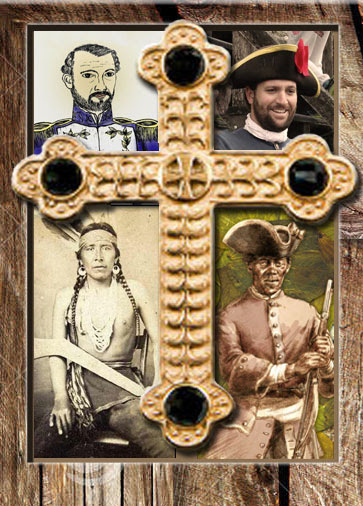
The Casqui Indians adored the cross De Soto mounted in their village
Source: Early History of the Creek Indians and Their Neighbors #121
Project ID
Chapter
No chapter
Timeline title
Start date
End date
Filename received
Filename assigned
Content
Enable editor
Use plain text
Code entry
The name of another problematical tribe is spelled variously Kaskinampo, Caskinampo, Kaskin8ba, Caskemampo, Cakinonpa, Kakinonba, Karkinonpols, Kasquinanipo. It is applied also to the Tennessee River. Coxe speaks of the Tennessee as a river "some call Kasqui, so named from a nation inhabiting a little above its mouth." 2 This spelling serves to connect the tribe with one mentioned by De Soto, and called in the writings of his expedition Casqui,2 Icasqui,4 or Casquin.5 The Spaniards reached the principal town of Casqui about a week after they had crossed the Mississippi, while moving north. The Casqui were at that time engaged in war with another province or tribe known as Pacaha. In the principal town of Casqui near the chiefs house was an artificial mound on which De Soto had a cross set. Ranjel says, "It was Saturday when they entered his village, and it had very good cabins and in the principal one, over the door, were many heads of very fierce bulls, just as in Spain noblemen who are sportsmen mount the heads of wild boars or bears. There the Christians planted the cross on a mound, and they received it and adored it with much devotion, and the blind and lame came to seek to be healed."1 Afterwards De Soto went on to Pacaha and finally made peace between the two, a peace which we may surmise did not last much longer than the presence of De Soto insured it. While at Pacaha the Spaniards learned of a province to the north called Caluca2 or Caluc.3 This would seem to be the Choctaw or Chickasaw Oka lusa, "black water," from which we may possibly infer the Muskhogean connection of Casquin, but, on the other hand, the name may have been obtained from interpreters secured east of the Mississippi, and may be nothing more than a translation of the original into Chickasaw. After this sudden and rather dramatic appearance of the tribe we are studying upon the page of history, they disappear into the dark, and all that is preserved to us from a later period is the reference of Coxe, two or three other short notices, and the persistent clinging of their name in its ancient form to the Tennessee; but scarcely anything is known regarding them, either as to their affinities or ultimate fate. (Swanton)
Replace existing data with this data