^
Update this timeline entry
Jospogue had to choose between Spanish and English
Source: Runaways, Renegades, and St. Augustine's Towns People #113
Project ID
Chapter
No chapter
Timeline title
Start date
End date
Filename received
Filename assigned
Content
Enable editor
Use plain text
Code entry
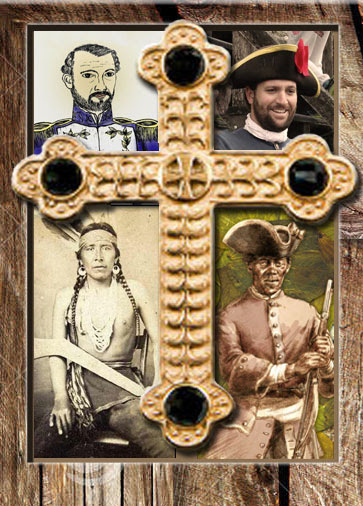
Francisco Jospogue Up the Atlantic coast from St. Augustine about 60 leagues (150 miles) near the St. Catherine's Island (Georgia), the stormy weather also dampened the face of Francisco Jospogue as he too looked out to the ocean. The same weather system [Fall 1684] brought gusty winds and dark skies to both Francisco and to Gertrudis [Morales 1684]. Francisco Jospogue faced the marshes of the estuary and a frightening future. "Will I be alive next summer or will I starve or be killed or captured by English raiders? Should I turn to the English? Would it be better if I stay with the Spanish as my parents chose?" Francisco dreaded the thought of fleeing again. Carolinians had attacked his village on St. Catherine’s Island (Santa Catalina) in May 1680. He and his neighbors fled south to the mission village of San José on Sapelo Island (Zápala). Now rumors warned that there would be more assaults by the English who were now joined by their own Indian allies. How his life had changed in ten years since Bishop Gabriel Díaz Vara Calderón visited Francisco’s village in 1675. The bishop said Mass and confirmed already baptized Christian worshippers. Francisco knew that he would soon have to choose sides, for the Europeans would not allow him to be neutral or to remain outside of their rivalries. For Catholics, like Francisco and his neighbors, the choice also was also a matter of religion. Catholic priests had arrived in his village years before the landing of the Carolinians. The priests had brought Christianity to the villagers and taught some of the villagers to read and write. Francisco shivered at what the price of his choice might be. The English from Carolina enslaved Indians who were enemies and thus could be captured in war. Most of the Indians slaves were shipped to the English sugar islands in the Caribbean, to New England, or to Europe. While he may have known little of the Africans and their capture and deportation to faraway lands, Francisco never thought until now that he or his loved ones might face similar threats. Remaining loyal to the Spanish would mean that he could be a target for enslavement as an enemy of the English. (Parker RR)
Replace existing data with this data