^
Update this timeline entry
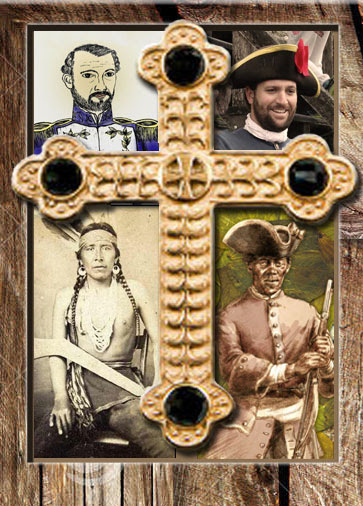
The Yamasee War was against the abuses of the Carolina traders
Source: New Paths Beaten: Verner Crane's The Southern Frontier #564
Project ID
Chapter
No chapter
Timeline title
Start date
End date
Filename received
Filename assigned
Content
Enable editor
Use plain text
Code entry
Nowhere is this [Indian free agency] more apparent than in Crane's discussion of the Yamasee War, a pan-tribal revolt against the Carolina begun in 1715. Far from a typical revolt against land-hungry colonists, the Yamasee War was sui generis in origin, as Crane describes it, aINTRODUCTION XXUl revolt directed against the abuses of the traders, who had sold their women and children into slavery, abused the Indian women, and used debt as a tool of coercion. "Indian resentment," as Crane termed it, becomes understandable as do the targets of Indian vengeance in light of Crane's discussion. ...As with new approaches to frontier and Native American history, Crane's work might be said to foreshadow the recent emergence of yet another genre, the so-called New Imperial History, seen in the work of scholars such as J. Russel Snapp, Michael McConnel, Timothy Shannon, Eric Hinderaker, and Gregory Evans Dowd. 8 Whereas the "old" imperial history emphasized the study of imperial institutions from a decidedly metropolitan perspective, the New Imperial History places the frontier at the center of the story of the development of the British Empire in North America. Integral to that story, of course, are Native American peoples, whose actions shape the policies developed in the colonial capitals and in London. Again, Crane's discussion of the Yamasee War might serve as a model. The Indian uprising of1715, Crane demonstrated, directly influenced Carolina frontier policy, as colonial officials abolished (temporarily, as it turned out) the system of trade founded on private enterprise and solidified the Carolina frontier with a string of forts. ...On a final note, while there is much work to be done in reconstructing the history of the region, suffice it to say that thanks in large part to Crane and his admirers, the colonial Deep South occupies a less marginal place in American history than it did even a generation ago. We might imagine that Crane would be happy to know that Parkman has not had the ((last word" on the subject of the colonial frontier. In the twenty-two years since the last release of The Southern Frontier, highly esteemed-indeed, prize winning-books by Daniel Usner,]ames Merrell, and Claudio Saunt, to name but a few, have placed the Deep South more at the center of the story of American development. 9 Anthropologists have done their fair share, too, in reconstructing the early social history of the southeastern Indians. A cottage industry ofYamasee War studies seems to have emerged, as evidenced by the proliferation of dissertations on the subject. And many a college-level U.S. history textbook contains at least brief mention of the unique origins of the South Carolina colony, if not the Yamasee War. Crane's work, once described as the ((opening chapter" to the study of the region, can no longer be described as the only one. 10 May that other chapters be written to honor the man, Verner Crane, and the book, The Southern Frontier.xxvi INTRODUCTION NOTES 1. The best concise summary of Crane's life can be found in Peter Wood's preface to the 1981 Norton edition.
Replace existing data with this data