^
Update this timeline entry
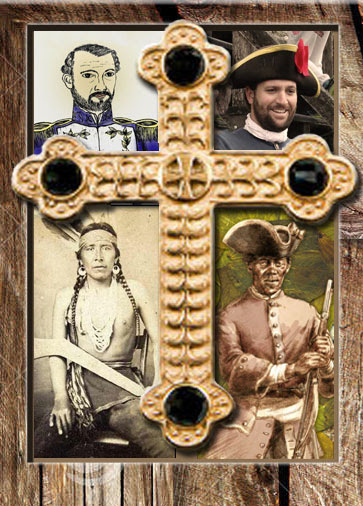
Spain's Ordinances of Pacification converted High Conquest to peaceful advances
Source: Situado and Sabana #82
Project ID
Chapter
No chapter
Timeline title
Start date
End date
Filename received
Filename assigned
Content
Enable editor
Use plain text
Code entry
From the founding of St. Augustine in 1565 to the colony's transfer to the British in 1764, Spanish Florida history falls into five overlapping time periods: the eras of the Adelantamiento, the Nearer Pacifications, the Farther Pacifications, the Building of the Castillo, and the Walled City. Each period had its own assemblage of problems and policies. ...Philip II's Ordinances of Pacification, issued in 1573, signalled the end of the High Conquest in Spanish America and the dawn of a new era of peaceful advances and voluntary conversions. Missions of Franciscans travelled from Spain to Florida to reopen conversions. (Bushnell SS) ...Under the new system [Ordinances of Pacification], friars on "flying missions" visited the nearer provinces of infieles to raise crosses and invite the chiefs to visit St. Augustine, where they would receive gifts from the king, confirm "friendships" of trade and mutual defense, and register formal requests for friars. In Spanish eyes, these actions made them and their vassals at once Spanish subjects and Christian neophytes. Centers of indoctrination consisting of a church and a convent were established in the towns of paramount chiefs, from which the doctrineros, or teaching friars, serviced strings of visitas in the subject towns. The Franciscans took orphans and the sons of chiefs into their convents and raised their own sacristans, musicians, interpreters, catechists, and overseers. AN7 After the preparatory stage of conversion, each doctrina received from the king a 1000- peso baptismal gift of religious essentials, among them vestments, linens, images, sacred vessels, baptismal registers, large bells, and an altarstone holding a holy relic. Periodically, the chiefs received European clothing for themselves and cloth, blankets, and iron tools to distribute to their followers, all paid for out of the gasto de indios, added to the situado for the purpose of "regaling" the chiefs. For the Spanish, there were decided advantages to having mission provinces. First, the Christian towns provided an early warning system and a buffer zone against invasion. The chiefs and their vassals were St. Augustine's first line of defense. Second, the chiefs included their Spanish allies in the sabana system, the native system for public finance. AN47 Each planting season, the commoners of a town planted one sabana of maize for each of their chiefs and principales and another one for the community as a whole. With their new iron tools, they now planted two more sabanas, one to support the church and the doctrinero with his retinue, and the other for "the king's service," to feed those travelling on "the king's business" or otherwise serving the Crown. Third, the chiefs provided labor to the presidio on occasion. This practice began during the 16th-century wars, when they offered their vassals to the Spanish as auxiliary scouts, baggage carriers, couriers, canoe paddlers, and archers. In 1600, Governor Gonzalo Mendez Canzo drafted natives from Guale Province to rebuild St. Augustine after a fire. After that, he summoned them in relays to work in the soldiers' fields for rations and a minimum wage, paid to them in trade goods through their chiefs. The colony became increasingly dependent on this labor repartimiento. Technically, a nation "conquered by the Gospel" was not subject to the labor service, only a nation "conquered by the sword." But there was little peaceful about the Nearer Pacifications. It took years of European epidemics, Spanish steel and firepower, and "scorched earth" campaigns to divide and conquer the Indians of the east coast. Those who rebelled against their Spanish overlords, as the Guales did in 1576 and 1597, were reconquered by "wars of fire and blood" and reintegrated under different terms, subject to the labor levy. (Bushnell SS)
Replace existing data with this data